
Across mystical traditions, esoteric philosophies, and modern metaphysical systems, there appears again and again a single, unsettling idea: we live behind a veil.
The veil has been described as forgetfulness, illusion, perceptual limitation, amnesia, or density. In some traditions it is portrayed as a necessary condition of incarnation; in others, as a distortion imposed or reinforced by outside forces. Depending on the source, it can feel like a test, a trap, or a tragic fall from a more luminous state of being.
But there is a danger in how the veil is often framed.
When the veil is presented as punishment, imprisonment, or something that must be violently torn away, the result is not liberation—it is pressure. Anxiety. A sense of failure. The quiet belief that we are behind schedule, broken, or trapped in the wrong place at the wrong time.
This essay offers a different view.
What if the veil is not evidence that something has gone wrong—but proof that something important is happening here?
Forgetfulness as a Condition, Not a Curse
Across traditions, the veil is often misunderstood as a moral failure or a punishment imposed upon humanity. Yet the oldest mystical sources describe something far subtler: forgetfulness as a condition of perception, not a verdict on worth.
In the Gospel of Truth, ignorance is not treated as sin, but as a state of forgetfulness—a condition in which humanity forgets its origin and mistakes appearances for reality. Error arises not because humanity is inherently evil, but because it forgets.
“For ignorance of the Father brought anguish and terror. And the anguish grew solid like a fog, so that no one was able to see.” The Gospel of Truth, The Nag Hamadi Scriptures
What matters here is not the forgetting itself, but what follows from it. When perception is clouded, reality is misread. Appearances are mistaken for truth. Error arises—not because humanity is corrupt, but because it does not remember its origin.
Yet the text offers reassurance just as clearly as it offers diagnosis. Error, it says, has no true root. Forgetfulness is real, but it is not final. The veil obscures—but it does not sever.
This understanding reframes the human condition entirely. We are not fallen in disgrace; we are focused in limitation, so that remembering can become meaningful rather than automatic.
The Law of One Ra Material echoes this idea from another angle, describing a deliberate veil placed between the conscious and unconscious mind. The veil is not a punishment, but a catalyst—one that intensifies choice, polarity, and the significance of decision.
If forgetfulness is a condition rather than a curse, the question naturally follows: why place consciousness under such conditions at all?
The Law of One offers a remarkably direct answer. According to Ra, the veil exists not to punish consciousness, but to intensify experience—to make choice consequential:
“The purpose of the veil is to intensify the experience of choice.”
— Session 82.2, Law Of One: The Ra Material
Without the veil, awareness would flow too freely between conscious and unconscious knowing. Decisions would be obvious. Unity would be self-evident. Growth would still occur—but slowly, gently, without friction.
Ra is explicit about this tradeoff:
“Without the veil, the mind would not be caught between the conscious and unconscious portions…
Thus polarization would be minimal.”
— Session 83.19 Law Of One: The Ra Material
In other words, this life matters precisely because it is difficult to see clearly.
Here, under veiled conditions, choice has weight. Love is not reflexive. Integrity must be practiced without certainty. This density becomes the crucible in which consciousness sharpens itself—not because it is cruel, but because it is effective.
Among countless simultaneous expressions of being, this is the one where awareness does not drift—it decides.
Veiling, Interference, and Perspective
In the Voyagers material, the language becomes more technical: perceptual interference, frequency fences, DNA suppression, and memory fragmentation. Here, the veil appears not only as a condition of incarnation, but as something later reinforced or exploited.
Some modern metaphysical frameworks describe the veil not only as a natural condition of incarnation, but as something later reinforced or exploited. Here, the series uses technical language to describe perceptual limitation, referring to mechanisms such as frequency fences and perceptual interference:
“Frequency fences are used to project illusions of reality into the human perceptual field.” Voyagers 1, Ashayana Deane
Whether one interprets this language literally, symbolically, or somewhere in between, the effect described is familiar: consciousness operating within narrowed bandwidth, mistaking a partial view for the whole.
Crucially, the Voyagers material does not frame this limitation as proof of original failure. Instead, it describes humanity as a consciousness that once functioned with broader awareness and now operates within constraint—yet retains the capacity for recovery:
“The human condition is not one of original failure, but of progressive limitation imposed upon a previously multidimensional awareness.”
— Voyagers II, Ashayana Deane
This distinction matters. Limitation is not the same as condemnation. Constraint does not erase value. Even if interference exists, it does not nullify the purpose of embodiment. In fact, it may help explain why presence, discernment, and coherence matter so much here.
No one reinforces an environment that produces nothing of consequence.
A Compassionate View of the Veiled Life
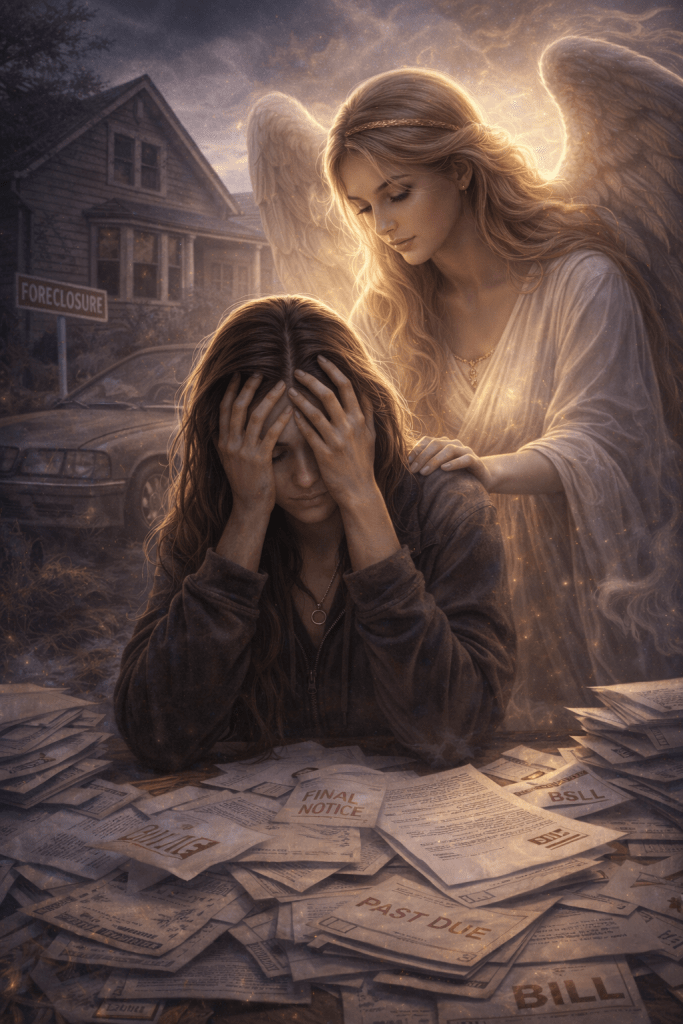
While some systems emphasize mechanics and others metaphysics, Edgar Cayce brings the discussion back to lived experience. In Search for God, the veiled state is neither dramatized nor denied—it is simply treated as the context in which the soul comes to know itself:
“The soul enters materiality that it may know itself to be itself—and yet one with the Whole.”
Here, the veil becomes relational rather than adversarial. Forgetfulness allows individuality to form. Separation allows choice to emerge. The soul learns not by escaping limitation, but by acting rightly within it.
Cayce gently dissolves the pressure that so often accompanies spiritual seeking:
“It is not necessary that one be conscious of all things to live rightly.
Rather, one must use what is known in service to others.” Edgar Cayce, In Search for God
This perspective frees the reader from urgency and fear. Awakening is not a race. Remembrance is not measured by how much one knows, but by how faithfully one lives what is known.
The veil is not an enemy. It is a classroom.
Across all these perspectives—despite differences in cosmology or emphasis—the result of the veil is the same:
We forget who we are
so that remembering can matter.
Why This Life, of All Lives?
Many esoteric systems describe not one life, but many—dozens, hundreds, even thousands of simultaneous expressions of consciousness unfolding across dimensions, densities, and timelines. If that is the case, a natural question arises:
Why this body, this era, this planet, this level of limitation?
If consciousness exists elsewhere in states of greater awareness, fluidity, or unity, why would attention be so intensely focused here—inside a veiled, dense, often confusing human experience?
The answer may be simpler than it appears.
This is the life where friction exists.
This is the environment where:
- The choice is not obvious
- Truth is not self-evident
- Love requires effort
- Integrity must be maintained under pressure
In less veiled states, knowing is immediate. Unity is obvious. But where everything is known, choice loses weight.
Here, under the veil, choice becomes meaningful.
This is not the most glamorous existence.
It may not be the most pleasant.
But it may be the most consequential.
This is where intention crystallizes into action.
This is where coherence must be embodied, not imagined.
This is where consciousness proves itself through lived experience.
If there is a “mission,” it is not escape.
It is engagement.

Reframing the Presence of Adversity
In recent years, much attention has been placed on external forces—technological, psychological, electromagnetic, ideological—that appear to influence human perception and behavior. Some describe these as weapons. Others as distortions. Still others as inevitable byproducts of a technological civilization.
There is truth in examining these influences. Awareness matters.
But fixation carries a cost.
When attention remains locked on what is “being done to us,” we risk missing the deeper truth: no challenge appears where nothing is at stake.
Pressure does not mean you are losing.
Pressure means the environment is catalytic.
The presence of interference does not negate the value of this existence—it underscores it. One does not reinforce a battlefield that does not matter. One does not harden a training ground that produces nothing of consequence.
The invitation is not to deny adversity, but to reinterpret it.
Not as proof of imprisonment—but as evidence of significance.
Ascension as Integration, Not Escape
One of the most damaging ideas to emerge in spiritual discourse is the notion that ascension means leaving—leaving the body, the Earth, the human condition, or the present moment.
But across the deeper teachings, ascension is not flight.
It is integration.
It is the ability to hold higher awareness within limitation.
To remain coherent under distortion.
To choose alignment when forgetting would be easier.
The veil is not meant to be ripped away prematurely.
Nor is it meant to be worshipped.
It is meant to be worked with.
Remembrance does not arrive all at once.
It unfolds through lived integrity, presence, compassion, and discernment.
And it unfolds here—now—because this is where remembering has consequence.
A Gentler Conclusion
You are not behind.
You are not broken.
You are not trapped.
You are focused.
This life is not a mistake among many better ones.
It is the one where attention converges.
The one where awareness sharpens.
The one where the soul learns to stand upright under pressure.
Whether the veil arose through benevolent design, evolutionary necessity, later distortion, or some complex mixture of all three, its presence does not strip this life of meaning.
It gives it weight.
And perhaps that is why, among countless expressions of consciousness, this one matters so much.
If my writing has been meaningful to you and you’d like to help support future work, you’re welcome to contribute here. Donations help sustain the time, research, and care that go into this space. Otherwise, I am happy you are here and this content is free to you.
Make a one-time donation
Make a monthly donation
Make a yearly donation
Choose an amount
Or enter a custom amount
Your contribution is appreciated.
Your contribution is appreciated.
Your contribution is appreciated.
DonateDonate monthlyDonate yearlyDiscover more from Child of Hamelin
Subscribe to get the latest posts sent to your email.
 Child of Hamelin