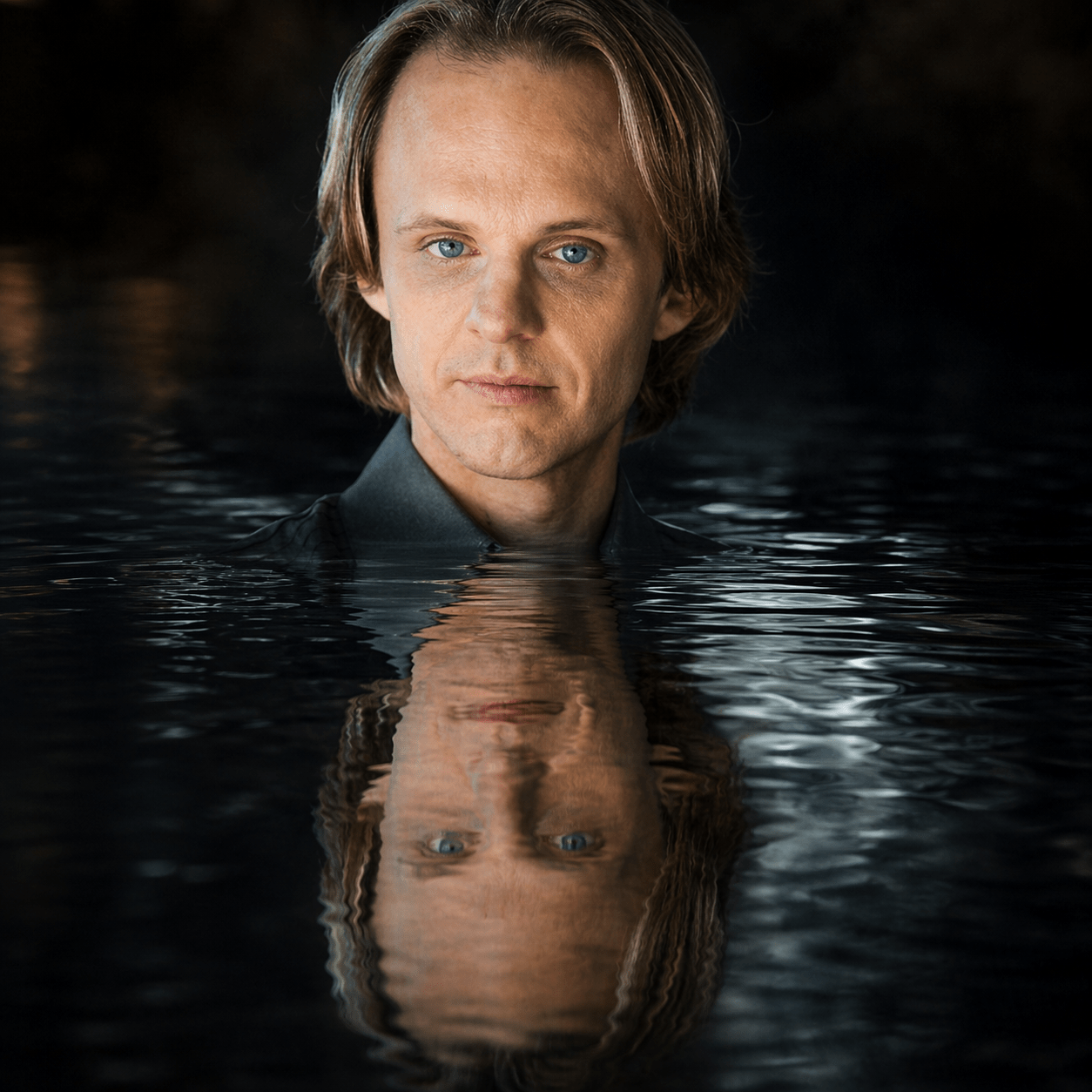
First thoughts within the first 24 hours of the announcement of David Wilcock’s death
There are moments when the world does not so much change as tilt.
A name enters the stream in a new way. A voice that had become familiar falls suddenly into silence. And all at once the air fills with fragments—grief, rumor, memory, projection, theology, suspicion, testimony, pattern, ache. One part of the mind wants to gather them into order. Another part knows better. Another part, older and quieter, simply keeps watch.
I am writing this within the first twenty-four hours of the announcement of David Wilcock’s death. That matters. It means I am not writing from the far shore of settled facts. I am writing from the threshold, while the dust is still moving, while people are still reaching for language, while the shape of the thing is not yet fixed.
So let this be what it is: not a verdict, not a final assessment, not an attempt to lock a living mystery into one explanation before its time. Let it be a marker. A witness note. A small fire lit on uncertain ground.
I will not rush into certainty.
Already, the stories have begun multiplying, as they always do when a public figure dies inside a charged field. Some will settle quickly into the official and familiar language of suicide. Others will move toward nervous collapse, cyberstalking, staged disappearance, murder, spiritual attack, hidden handlers, or stranger architectures still. More may come out. Or almost nothing may come out. In this atmosphere, belief itself becomes dangerous. Not because belief is always wrong, but because what we choose too quickly can become a chamber we cannot easily leave.
And I have no wish to build myself a chamber out of fresh grief.
I did not stand outside David Wilcock’s body of work. I was not merely glancing over the shoulder of the internet as it passed him by. I studied. I listened. I took webinars, read books, followed the weekly podcasts for years, and let the current of his thought move through my own interior weather for a long time before I stepped back. That does not make me infallible. It does mean I know the texture of the thing from within. I know the voice that braided prophecy with disclosure, spiritual war with hidden history, cosmic possibility with moral warning. I know the uplift. I know the sweep. I know the seduction. I know the peculiar loneliness of studying such material in silence, with no one in the outer room to speak of it with.
And so I cannot speak of him as though he were just another figure passing through the fever swamp of the age.
He mattered.
Not because every claim must therefore be defended. Not because a teacher becomes sacred by being followed. But because the work of a human being can enter other lives and remain there. It can awaken something. It can provoke, refine, distort, strengthen, trouble, illuminate. It can become part of the inner furniture. And when the person dies—or is said to have died—the students are not only left with news. They are left with a rearrangement of meaning.
That is part of what I am feeling now.
But let me say this as plainly as I can: a teacher’s fall does not require me to discard every gift I received through their work, any more than a teacher’s charisma requires me to surrender my discernment. Human beings are not clean vessels. They are mixed. They are burdened. They are radiant in one room and fractured in another. They tell truth and exaggerate, serve and perform, bless and confuse, often in the same lifetime and sometimes in the same sentence. It is one of the hardest lessons of incarnation, that the messenger is almost never as pure as the message we hoped to receive, nor as hollow as the cynics insist.

So no, I will not turn this into a ritual disowning.
And no, I will not turn it into blind devotion either.
Because disclosure, if it means anything at all, does not lessen the burden of discernment. It deepens it. The danger is not only in what has been hidden from us. The danger is in how what has been hidden is finally revealed. A truth can arrive already dressed in distortion. A real phenomenon can be carried forward on a false frame. A disclosure can be used to bend moral instinct, repackage spiritual danger as enlightenment, direct reverence toward the wrong throne, or teach people to love the glow while forgetting to test the fire.
This, to me, is the true trouble of the hour.
Not simply whether hidden things are real. Not simply whether the old walls are breaking. But who is narrating the break. Who is supplying the symbols. Who is telling us what the unveiled world means and what posture we should assume before it. Because life does not become easier when disclosure begins. It becomes more demanding. The seeker is no longer tested only by secrecy, but by revelation itself.
And revelation can be corrupted.
This is why I cannot look at the death of a man like David Wilcock and see only one layer. I see the sorrow. I see the possibility of nervous system collapse. I see the possibility of manipulation. I see the possibility of a story still being staged around the edges. I see the inevitability of mythmaking. I see students defending, doubting, archiving, grieving, hunting patterns, gathering crumbs. I see how quickly one event becomes five narratives, then ten, then a theology. I see how the mind longs to choose a door and nail it shut behind itself.
But I would rather remain in the hallway a little longer.
Because my soul does not belong to the first explanation that offers relief.
That may be the simplest truth I have today.
I can honor the man and still leave room for unanswered questions.
I can grieve and still refuse spectacle.
I can acknowledge what his work gave me and still continue walking past him.
I can admit that my own becoming was never meant to be tied to the life or death of another teacher.
If he carried truth, that truth is not buried with him.
If he carried distortion, that distortion will reveal itself in time.
If he carried both, as most of us do, then discernment must do the slow and holy work of sorting.
That work now belongs to the living.
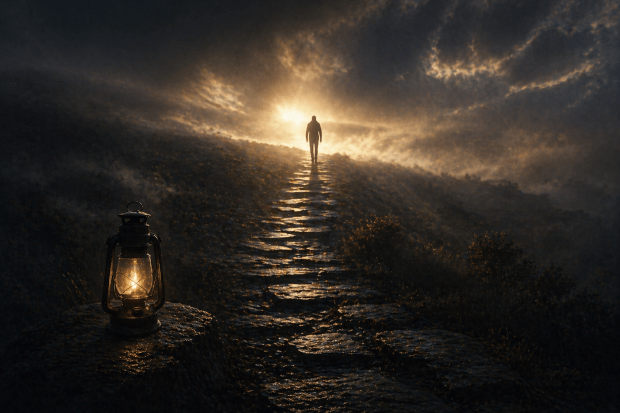
So this is my first response, and only my first. I choose, for now, to honor David Wilcock as a man whose work entered the lives of many and will likely continue to ripple outward long after his body has gone still. I choose to keep what was nourishing, release what was binding, and leave open what remains unresolved. I choose not to collapse inward because a torch I once studied by has gone dark. The path was never the torchbearer. The path was always what the light revealed, and what it asked of me once I could see.
And what it asks now is not certainty.
It asks steadiness.
It asks patience.
It asks moral memory.
It asks the refusal to worship shock.
It asks the willingness to remain teachable without becoming owned.
It asks the courage to keep evolving.
If more comes to light, I will meet it.
If contradictions deepen, I will meet them too.
If the story fractures into stranger shapes, I will not be surprised.
This age has made mirrors of too many things.
But I will not surrender my interior ground to frenzy.
Let the dead be met with mercy.
Let the living be schooled in discernment.
Let the seeker remember that no teacher, however luminous, can walk the final inward miles for us.
And let me remember, as I have had to remember before, that the light worth keeping is the one that survives after the voice that pointed to it is gone.
If my writing has been meaningful to you and you’d like to help support future work, you’re welcome to contribute here. Donations help sustain the time, research, and care that go into this space. Otherwise, I am happy you are here and this content is free to you.
Make a one-time donation
Make a monthly donation
Make a yearly donation
Choose an amount
Or enter a custom amount
Your contribution is appreciated.
Your contribution is appreciated.
Your contribution is appreciated.
Discover more from Child of Hamelin
Subscribe to get the latest posts sent to your email.

