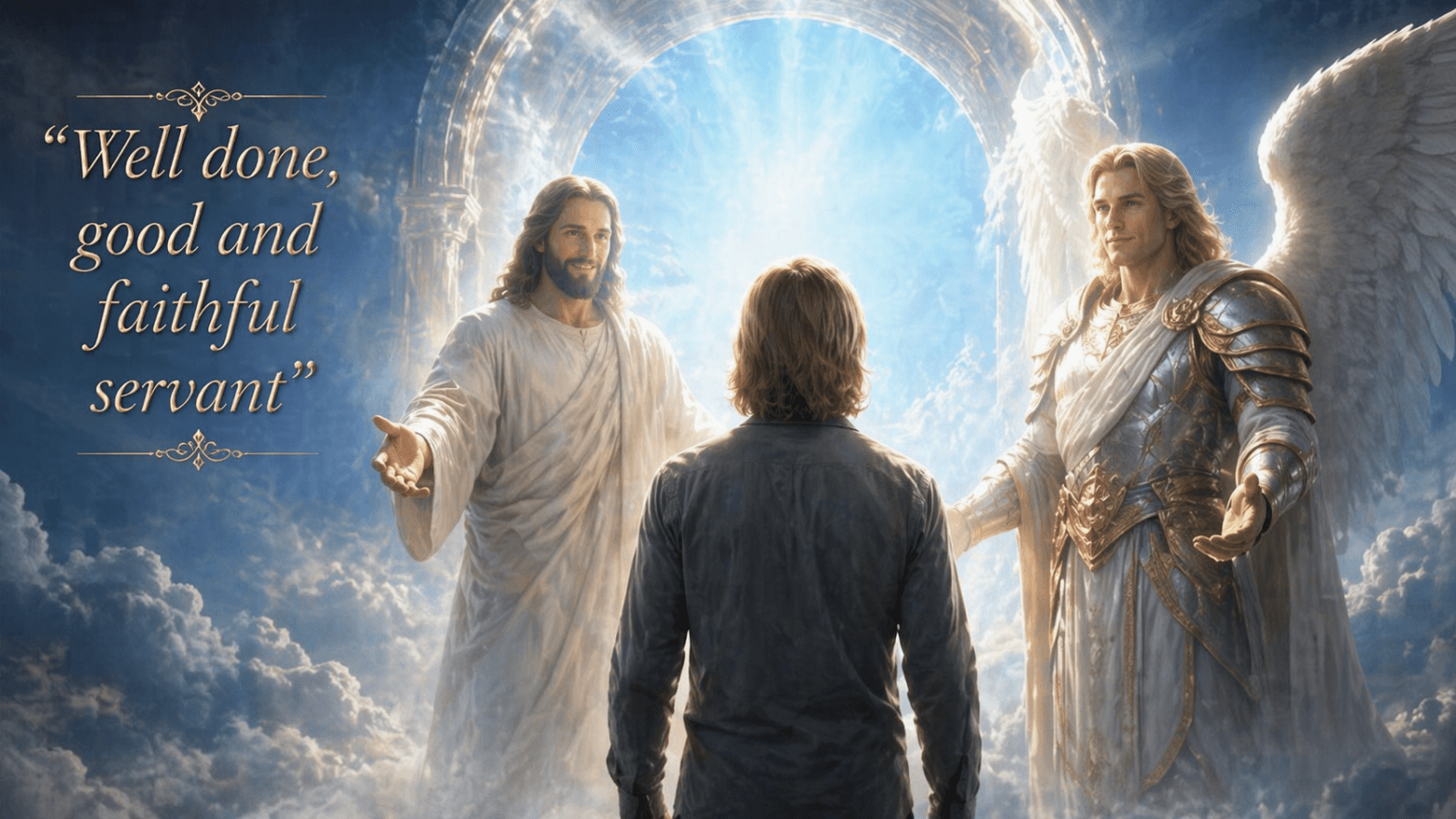
In the first days after the announcement of David Wilcock’s death, the mind does what it always does when struck hard: it begins building chambers.
One chamber says suicide. Another says murder. Another says spiritual warfare. Another says discrediting operation. Another says burnout, lawsuits, trolls, grief, isolation, and the slow fraying of a once-bright cord. Another reaches instinctively for symbolism, timing, ritual, correspondence, and all the electric strangeness that gathers around a charged death like filings to a magnet.
I have walked through all of those chambers.
And I do not dismiss them lightly.
David’s own body of work does not permit a shallow reading. In The Michael Prophecies, Book One (pp. 216–217), the voice presses urgency with unusual force: there is an “extremely upcoming deadline,” the material must be put into “immediate and full-scale dissemination,” and “we are running out of time.” In Book One again (pp. 150–151), that same spiritual world offers another note entirely: those who stand against evil will receive divine protection, even what David called “Executive Function,” and that “nothing shall hurt you.” The books contain both urgency and protection, both mission and shelter, both deadline and promise.
And yet that same worldview also leaves room for distortion, mixture, and tragic outcomes.
David was not naïve about that. He studied the Law of One. He lived for a time with Carla Rueckert and Jim McCarty after Don Elkins was gone. He knew the old contactee warnings. He knew the phrase “negative greeting” was not ornamental language.
In The Michael Prophecies, Book Four, in the Gloria Lee material, he presents a cautionary case in which a sincere contactee died after a fatal turn in her guidance, and he inserts the unforgettable note: “Negative replaced positive.” He then adds, more plainly still, “This was clearly a negative greeting.” That is not a decorative footnote. It is a warning he understood very well.
So yes, the mystery remains. It may always remain.

But after listening closely to the first hour of David’s final podcast, I find myself drawn back toward something simpler, sadder, and more human.
He did not sound to me like a man in theatrical panic. He sounded stressed, physically diminished, distracted, at moments a little sadder than usual, but still very much oriented toward life.
He talked about weight loss. He talked about needing food. He talked about digestion. He talked about sleep. He spoke of constipation, of drinking lots of water, of frequent urination, of fruity-smelling urine, of dry skin, of low energy, of not digesting salads well anymore. He said plainly that he did not want Ozempic because he did not want to lose more weight. He said he had done better when he was eating steak, broccoli, and eggs. He agreed he needed to see a doctor.
He spoke like a man trying to interpret signals from a body that had become unreliable, while still pushing himself to show up and speak.
That matters.
It matters especially to me because I once worked as a 911 medical, fire, and police dispatcher. Whenever there was an incident where someone was acting “crazy,” one of the first questions we asked was whether the person was diabetic. Not because every bizarre behavior traces back to blood sugar, but because diabetic crises can produce terrifyingly out-of-character actions.
The body deranges, and the mind follows.
Judgment shifts. Mood breaks. Confusion arrives. A person can do something no one around them would have predicted from the outside.
I cannot diagnose David Wilcock from afar, and I will not pretend to.
But I can say this: when a man is reporting unexplained weight loss, frequent urination, fruity-smelling urine, low energy, digestive disturbance, dry skin, poor sleep, and obvious concern that something is wrong, I do not hear only metaphysics. I hear a body waving a flag.
And the books themselves make that medical lane more plausible than many may realize.

In The Michael Prophecies, Book Six (pp. 265–266), David says he had been “very into being vegan,” but eventually realized he had “dangerously weakened” himself through “severe malnutrition.” He says that whenever he ate animal protein, such as fish, he felt much better for three or four days, and that he could no longer tolerate how his body and mind felt if he remained vegan.
In The Michael Prophecies, Book Seven (p. 364), he recalls being so lightheaded and depleted after a blood draw that he nearly pinched off from reality, and explains that at the time he had been “a strict vegan and very anemic.”
Later, in Book Seven (pp. 178–179), he says that Michael now endorses certain red meats in his diet and specifically praises cleaner animal protein, such as bison, as better for health and longevity.
This does not explain everything. But it explains a great deal.
A man can be spiritually intense, cosmically minded, publicly embattled, and physically unraveling all at once. A man can be carrying lawsuits, rumors, harassment, loneliness, money strain, grief, and symbolic pressure, while also being brought down by something as ordinary and merciless as blood sugar, malnutrition, dehydration, endocrine trouble, or a neglected medical crisis.
These things do not cancel one another out. Real life is seldom kind enough to separate its causes neatly.
So I am not ruling out the larger theories. I understand why others will continue to explore them. David himself would have done the same. He would have turned the event over from many angles, examining motive, meaning, timing, correspondence, pattern, and symbol.
I do not mock that instinct. It is part of why many of us studied his work in the first place.
But neither do I think it honors him to skip past the obvious bodily distress that seems to have been speaking right through that final broadcast.
Sometimes the simpler answer is not the flatter one.
Sometimes it is the more merciful one.
And yet I do not want to leave the matter there, because pathology alone is too small a vessel for a life like his.

If I step back into the symbolic language David himself lived within, another possibility emerges. The mission may simply have been completed. The books were unsealed. The material was released. The warnings were spoken. The pattern-language was deposited. The body that carried it may have been failing, but the work itself had already crossed through him and into the field.
The repeated urgency in The Michael Prophecies—the deadlines, the pressure not to delay, the insistence that the work be disseminated before time ran out—can be read not only as world prophecy, but as bounded instruction: get it down, get it out, leave it here.
In Book One the message demands time to complete the work before it is jeopardized. In Book Seven he finally speaks as one who has finished a seven-book arc and laid it down.
And if that is so, then the burden shifts.
The teacher is gone. The education remains.
That means the work now belongs to those he left behind.
Not for imitation.
Not for comparison.
Not for little hierarchies of grief, where one student judges another for carrying the flame in a different vessel.
The work belongs now to the students, the seekers, the adepts, the wounded and the watchful, and each will carry some part of it differently.
One will sift it intellectually.
Another will pray it.
Another will test it against Scripture.
Another will discard half and keep the living half.
Another will write.
Another will warn.
Another will serve quietly.
That too is part of the handoff.
So I do not want to wallow in blame.
I do not want to spend the rest of my energy forcing one final theory onto an event that may never fully yield one.
I want to tell the truth as carefully as I can.
I want to admit that a real medical crisis may have been standing in plain sight.
I want to admit that his own spiritual framework contained harsher possibilities than simple believers often remember.
And I want to say, with gratitude rather than spectacle, that David Wilcock was a gift to many of us who had the eyes to see and ears to hear.
Not a perfect man.
Not an uncomplicated man.
Not a man beyond contradiction.
But a gift nonetheless.
Now the mantle passes.
And what we do with it will say more about us than any final theory ever could.
If my writing has been meaningful to you and you’d like to help support future work, you’re welcome to contribute here. Donations help sustain the time, research, and care that go into this space. Otherwise, I am happy you are here and this content is free to you.
Make a one-time donation
Make a monthly donation
Make a yearly donation
Choose an amount
Or enter a custom amount
Your contribution is appreciated.
Your contribution is appreciated.
Your contribution is appreciated.
Discover more from Child of Hamelin
Subscribe to get the latest posts sent to your email.

